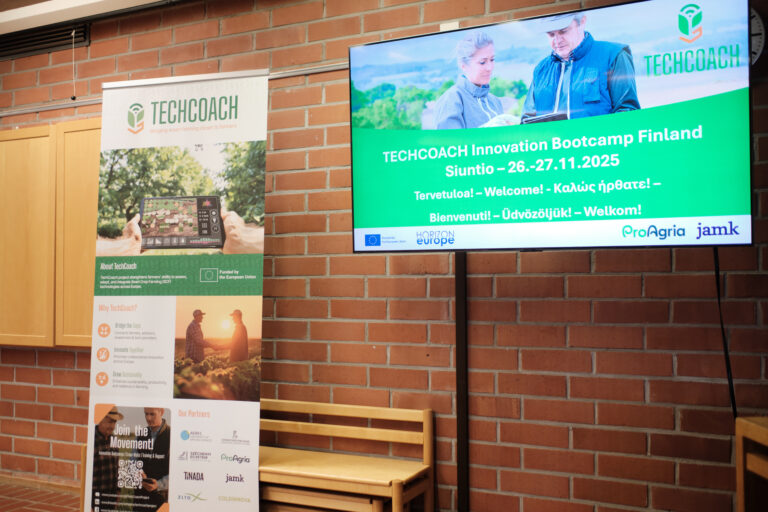
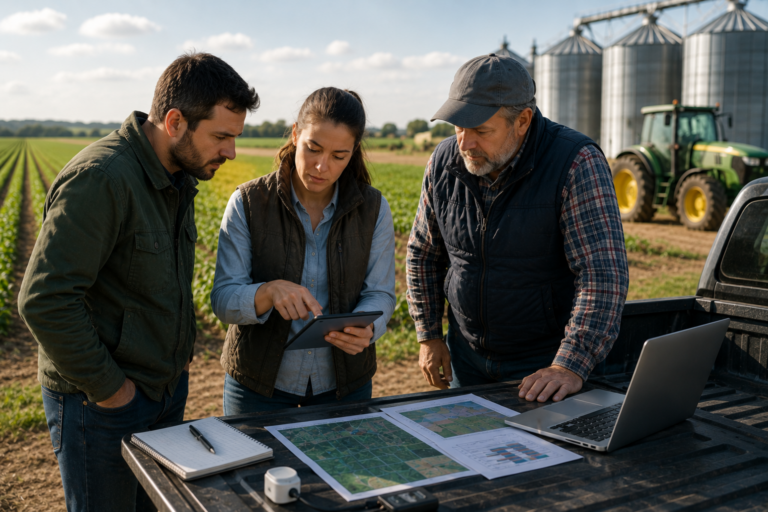
The TechCoach project has released new findings highlighting the practical experiences, challenges, and support needs of stakeholders involved in Smart Crop Farming (SCF) across Europe. The results, based on input from 150 participants within the TechCoach network, provide valuable insights for policymakers, advisors, and innovation stakeholders aiming to accelerate the adoption of smart agricultural technologies.
The survey captured perspectives from a diverse group of respondents, including advisors, researchers, farmers, students, policymakers, and technology providers. This broad representation offers a comprehensive view of the current state of facilitation and support for SCF adoption across Europe.
Despite the growing importance of Smart Crop Farming, participation in support activities remains relatively limited. Only 20.7% of respondents reported having engaged in such activities. However, those who did participate evaluated the support positively, with an average rating of 3.77 out of 5. Respondents particularly valued hands-on, practice-oriented approaches, including demonstrations, testing opportunities, and direct interaction with technologies. Access to up-to-date information, continuous learning opportunities, and stronger professional networks were also highlighted as key benefits.
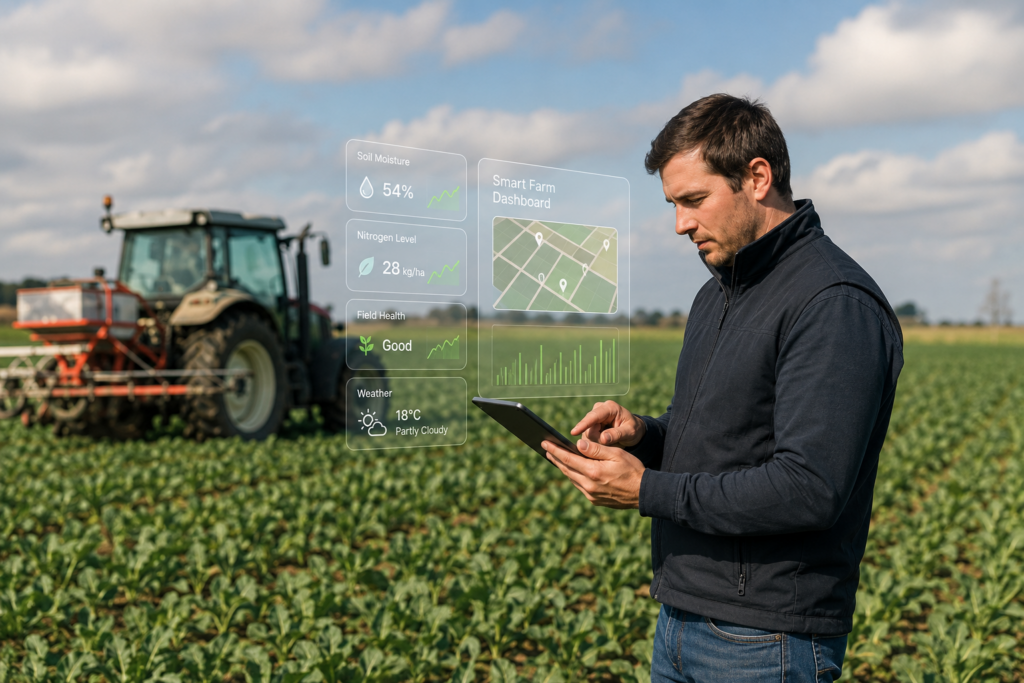
At the same time, the findings reveal important gaps in the current support landscape. Participants emphasized the need for a better balance between theoretical knowledge and practical application, as well as more neutral and independent guidance beyond technology-specific providers. Several respondents noted that current support activities do not always reflect real farming conditions, limiting their practical relevance. The role and quality of trainers were also identified as critical factors influencing the effectiveness of support activities.
The survey further identifies several persistent barriers hindering the adoption of SCF technologies. High investment costs emerged as the most significant obstacle, followed by a lack of knowledge and training, and insufficient technical support. Uncertainty about the benefits of smart farming technologies also remains a concern, while factors such as resistance to change and limited infrastructure play a secondary but still relevant role.
In addition to these core challenges, respondents highlighted broader systemic issues. These include concerns about data ownership and privacy, lack of interoperability between technologies, fragmented policy frameworks, and weak connections between research and practice. Cultural and generational factors, as well as limited economic scalability for smaller farms, further complicate adoption.
Looking ahead, the results underline a clear demand for more targeted and accessible support. Stakeholders call for practical training programmes, real-life demonstrations, reliable technical assistance, and clearer information on costs and benefits. Financial support mechanisms, including funding and incentives, are seen as essential to reduce investment risks. Stronger collaboration between farmers, advisors, researchers, and technology providers is also identified as a key enabler for successful implementation.
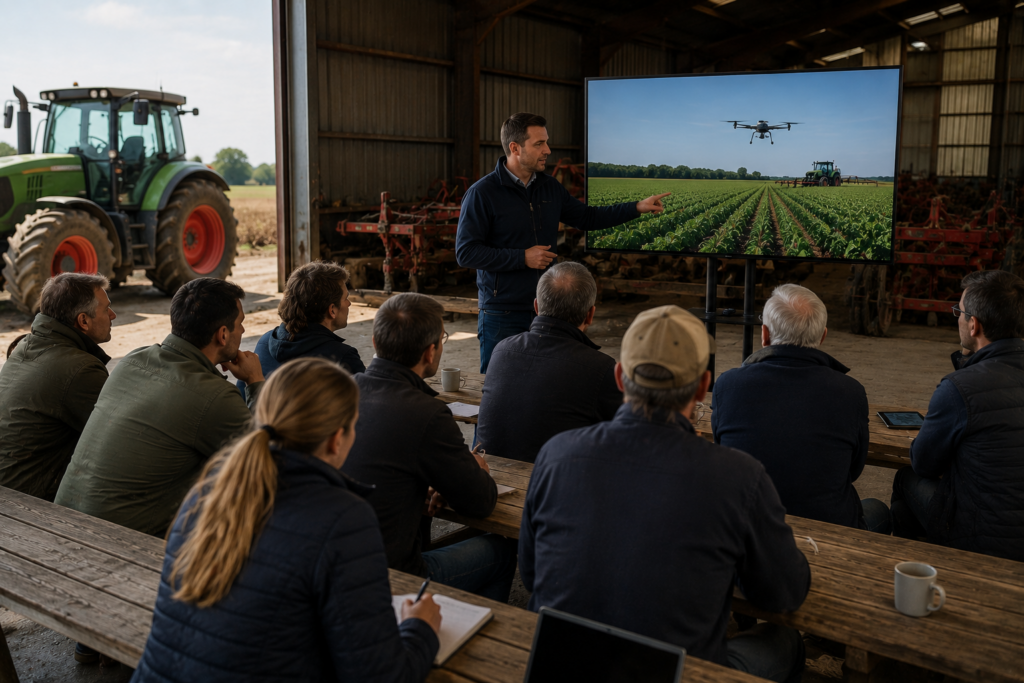
Interestingly, the survey also shows that 50% of respondents feel sufficiently supported and do not require additional assistance, suggesting a diverse landscape where support needs vary significantly across regions and stakeholder groups.
The TechCoach findings emphasize that the transition to Smart Crop Farming is not only a technological challenge but also a social, organisational, and economic one. Strengthening facilitation, improving knowledge exchange, and addressing structural barriers will be critical to unlocking the full potential of smart farming innovations across Europe.