Smart farming technologies can help improve crop monitoring, input management and farm-level decision-making. However, before investing in a new tool, many farmers want more than technical specifications or promotional claims. They want to understand how the technology performs under real farming conditions. This is why peer-to-peer learning matters. Farmers often value the experiences of other farmers who have already tested a technology, adapted it to their production system and dealt with the practical challenges of using it.
The value of practical experience
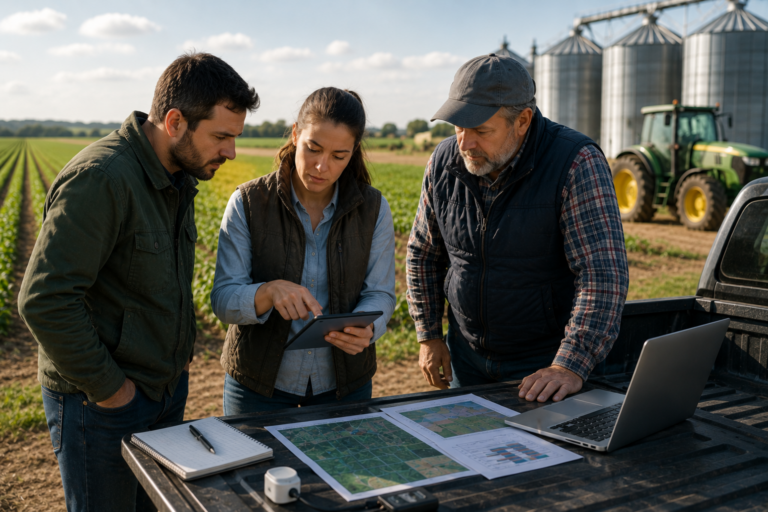
A farmer who has already used a technology can explain how easy it is to operate, whether it works with existing machinery, what support is required and whether the expected benefits were achieved. This practical knowledge complements the advice provided by agricultural advisors, researchers and technology specialists. It gives farmers a clearer picture of what adoption involves in everyday farm management.
Demonstrations, farm visits and honest exchange
Seeing a technology operating on a real farm can make both its potential and its limitations easier to understand. Demonstrations and farm visits allow farmers to ask questions, observe results and discuss the conditions under which a solution performs well. Peer learning is especially valuable when farmers speak openly about difficulties. Technical problems, unexpected costs, connectivity issues or weak compatibility can provide useful lessons for others considering the same solution.
Honest discussion builds trust because it presents adoption as it really is, not as a perfect success story, but as a process of testing, learning and adjustment.
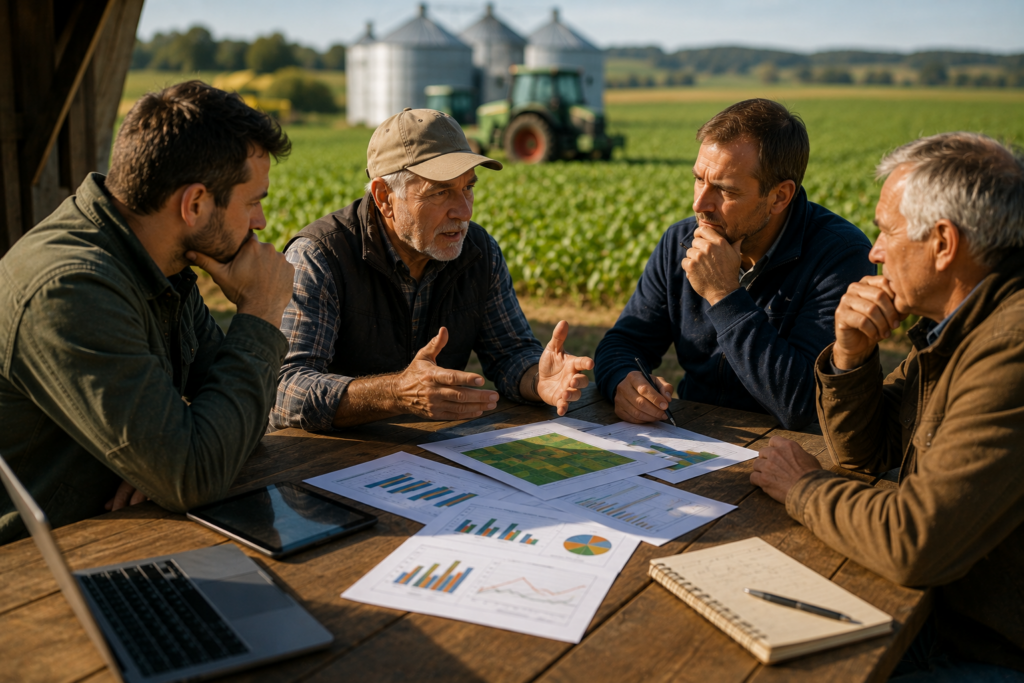
Comparing experiences and reducing uncertainty
No single farm can show how a technology will perform everywhere. Comparing experiences across different crops, farm sizes and local conditions helps farmers understand which benefits are consistent and which depend on the production context.
These exchanges can reduce uncertainty, support more realistic expectations and help farmers identify potential risks before making a larger investment. They may also encourage farmers to test a solution on a smaller scale first.
How TECHCOACH supports peer learning
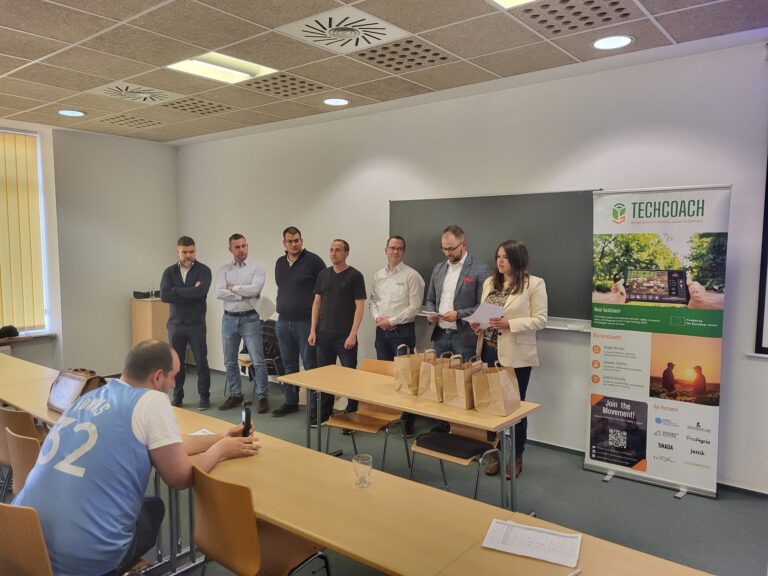
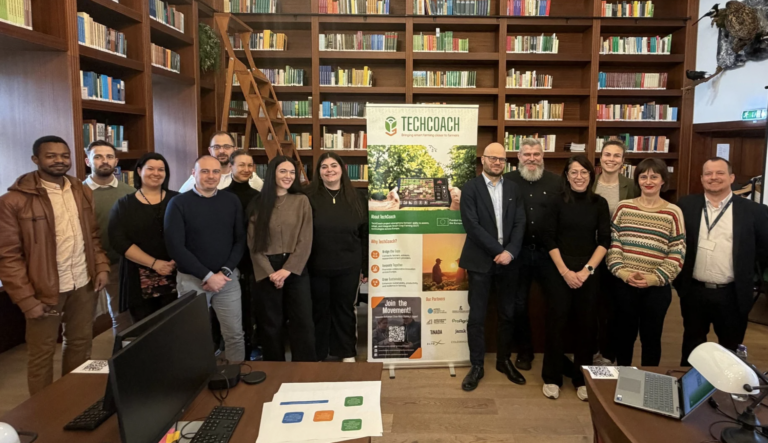
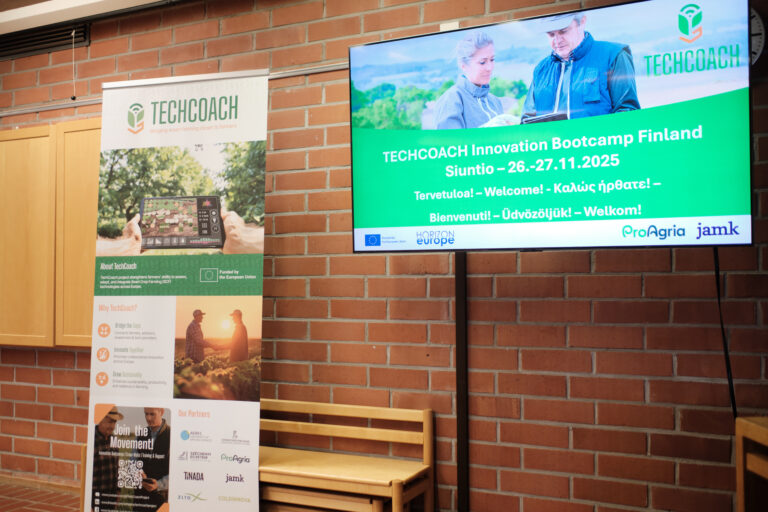
Peer-to-peer learning is an important part of the TECHCOACH approach to Smart Crop Farming. Through national networks, Innovation Bootcamps, cross-visits and knowledge-exchange activities, TECHCOACH brings together farmers, advisors, Operational Groups, researchers, technology providers and other AKIS actors.
These activities create opportunities to share practical experiences, compare technologies under different farming conditions and discuss both successful results and implementation challenges. By helping farmers learn directly from one another, TECHCOACH makes information more practical, credible and connected to real farm-level needs.