Agriculture is becoming increasingly data-driven. Sensors, satellite imagery, digital platforms and automated machinery can now provide farmers with detailed information about their crops, soils and use of resources. However, having access to more technology does not automatically lead to better farming decisions. This is where Smart Crop Farming and the advisory support surrounding becomes particularly important.
What is Smart Crop Farming?
Smart Crop Farming refers to the use of technologies, data and targeted management practices to support crop production. Its purpose is not simply to introduce more digital tools to the farm. It is to help farmers use resources more efficiently and adapt cultivation practices to the specific requirements of their crops and fields. Instead of applying the same treatment across an entire farm, Smart Crop Farming can support more precise decisions based on local conditions. This may include differences in soil characteristics, crop development, water availability, nutrient requirements or pest pressure. In practice, Smart Crop Farming may involve:
- precision irrigation systems that apply water according to actual crop and soil needs,
- variable-rate fertilisation based on soil data, crop conditions or field variability,
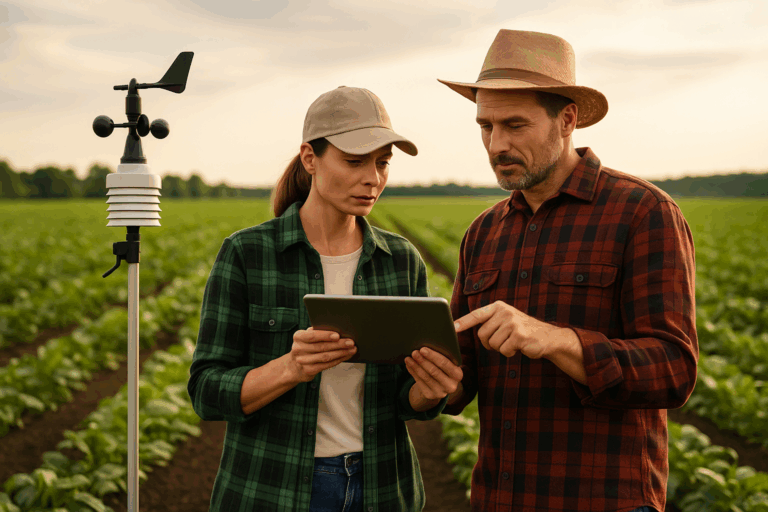
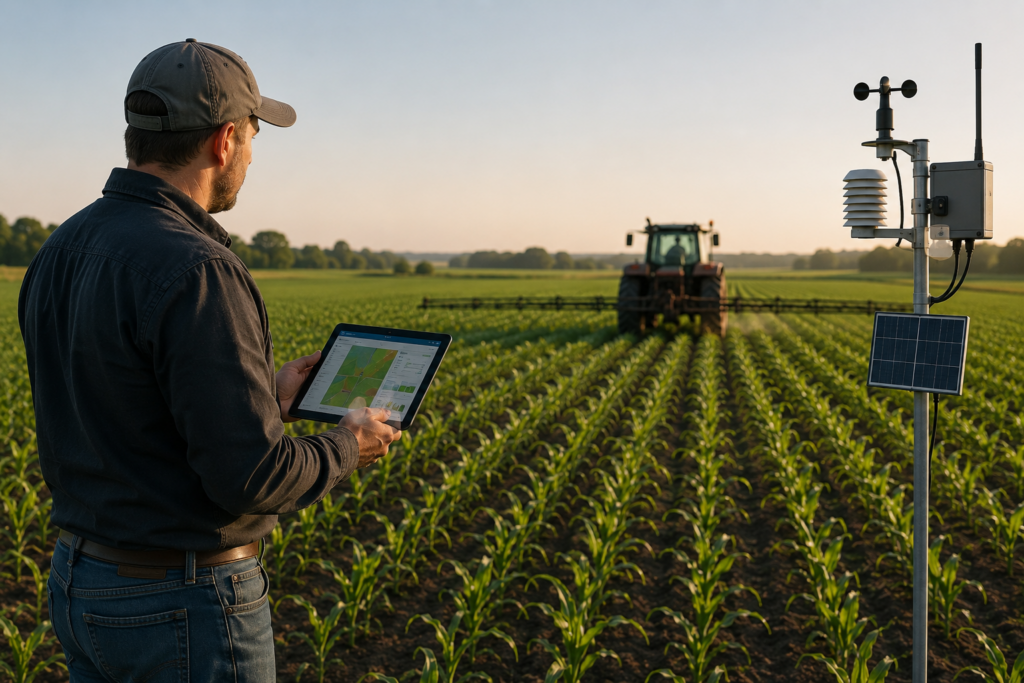
- sensors and monitoring systems that help identify changes in crop health,
- pest and disease monitoring tools that support earlier and more targeted interventions,
- satellite, drone or field imagery used to observe crop development,
- digital farm-management platforms that combine and organise information,
- decision-support tools that help farmers compare possible actions, and
- automated or GPS-guided equipment that improves the accuracy of field operations.
These technologies can support more efficient input use, improve the timing of farm operations and help farmers respond more quickly to changing conditions. Their value, however, depends heavily on how they are selected and used.
Technology alone is not the solution
A tool may be technically advanced and still be unsuitable for a particular farm. Farms differ considerably in their size, crops, production systems, available infrastructure, financial capacity and digital skills. A technology that works effectively in one region or production context may not deliver the same results elsewhere. Farmers therefore need to consider several questions before adopting a solution: What specific problem is the technology expected to solve? Is it compatible with the farm’s machinery and existing systems? What data does it require? Who will interpret the information it produces? What training, maintenance and technical support will be needed? Do the expected benefits justify the investment?
Without clear answers, farmers may invest in tools that are too complex, poorly adapted to local conditions or difficult to integrate into daily farm management. In other cases, useful technologies may be rejected because their purpose, cost or practical benefits have not been explained clearly enough. The challenge is therefore not only to make technologies available. It is to help farmers assess whether those technologies make sense for their own farms.
The role of advisory support
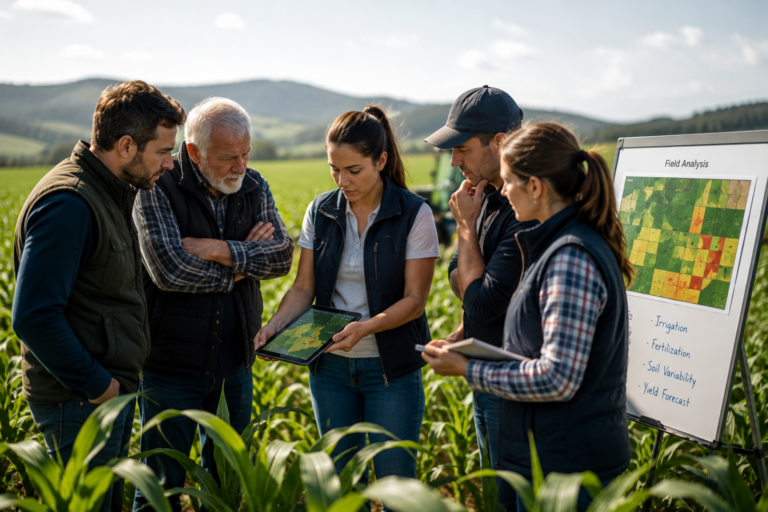
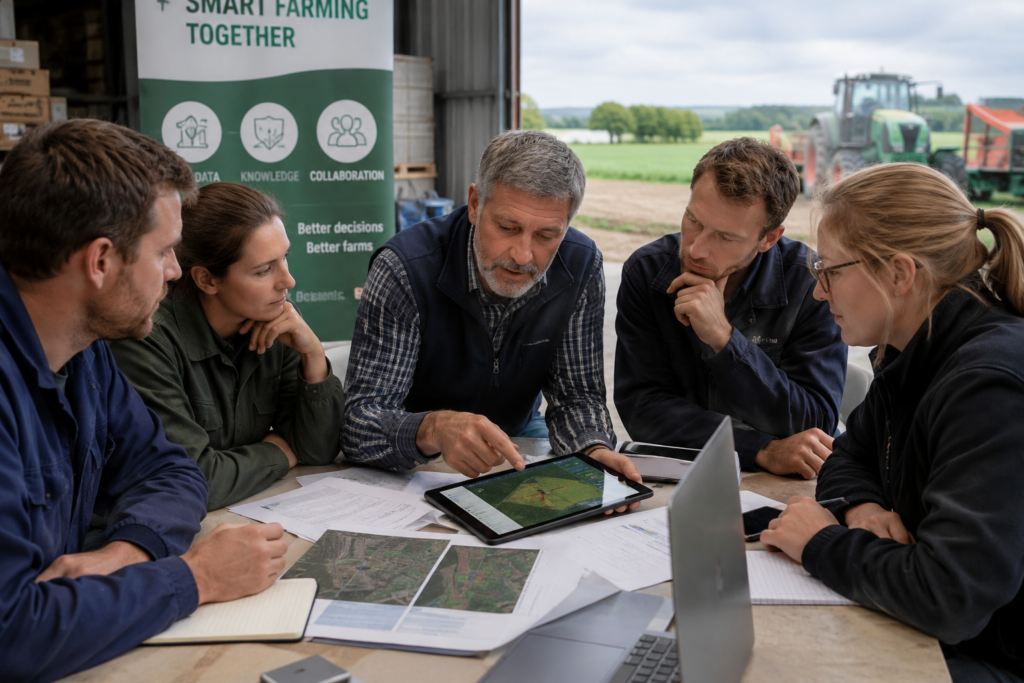
Agricultural advisors can help bridge the gap between technological potential and practical farm-level application. Their role begins with understanding the farmer’s actual needs. Rather than starting with a particular product, an advisor can help identify the production challenge that needs to be addressed, whether it relates to irrigation, fertilisation, crop monitoring, pest management, labour requirements or another aspect of production. Advisors can then support farmers in comparing available options, examining costs and benefits and considering how a technology could be incorporated into existing practices. They can also connect farmers with researchers, technology providers, other advisors and farmers who have already used similar solutions. This is especially important because no individual advisor can be expected to have complete and up-to-date knowledge of every emerging technology. Smart Crop Farming requires collaboration across different areas of expertise, including agronomy, engineering, data management, economics and farm business planning.
Farmer-focused, multi-actor advisory systems bring these different perspectives together. They create opportunities for farmers, advisors, researchers, technology providers and other Agricultural Knowledge and Innovation System actors to exchange knowledge and develop solutions around real farming needs.
Supporting informed adoption
Smart Crop Farming should not be measured by how many digital tools are used on a farm. Its value depends on whether those tools support better decisions, respond to genuine needs and can be integrated into everyday farm management. With the right advisory support, farmers can move beyond simply hearing about new technologies. They can evaluate them critically, understand their implications and select the solutions that are most appropriate for their production systems, resources and objectives.
How TECHCOACH supports smarter farming decisions
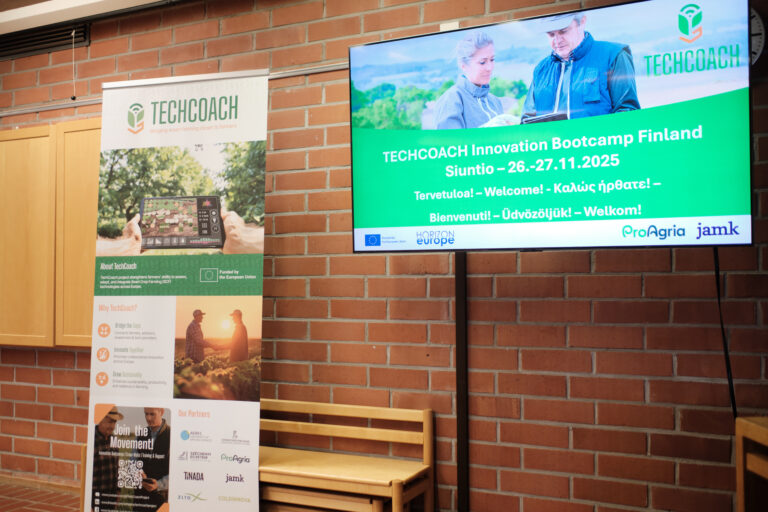
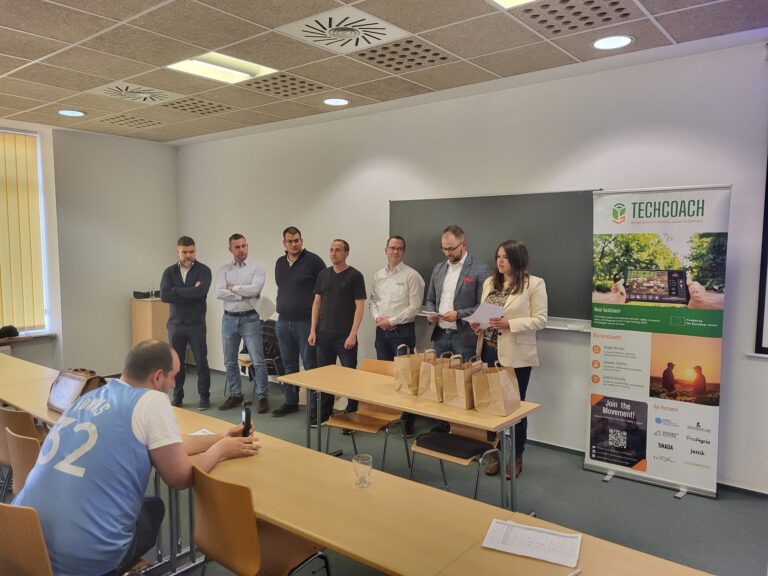
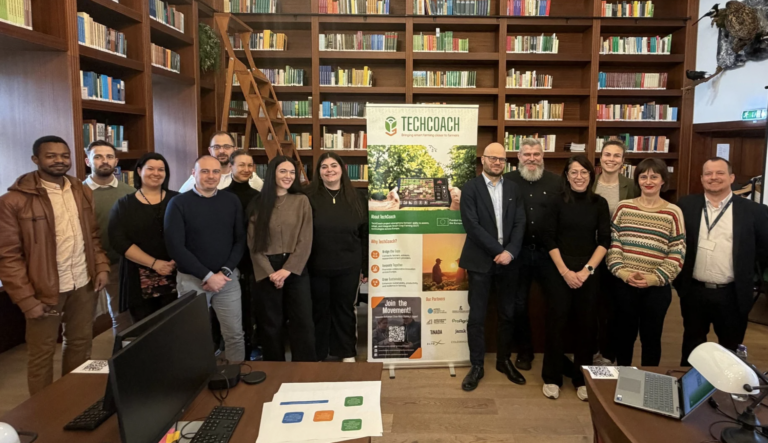
This need for informed, farmer-centred advisory support lies at the heart of the TECHCOACH project. TECHCOACH brings together farmers, agricultural advisors, Operational Groups, researchers, technology providers and other actors within Agricultural Knowledge and Innovation Systems to strengthen the adoption of Smart Crop Farming technologies. Through Innovation Bootcamps, training activities, cross-visits and practical knowledge exchange, the project supports collaborative processes built around real farming challenges.
By strengthening advisory capacity and connecting the actors, TECHCOACH helps create the conditions for Smart Crop Farming technologies to move from technical possibility to meaningful farm-level application.