
Innovation Camps | Hungary (Completed)
Co-creating practical Smart Crop Farming solutions.
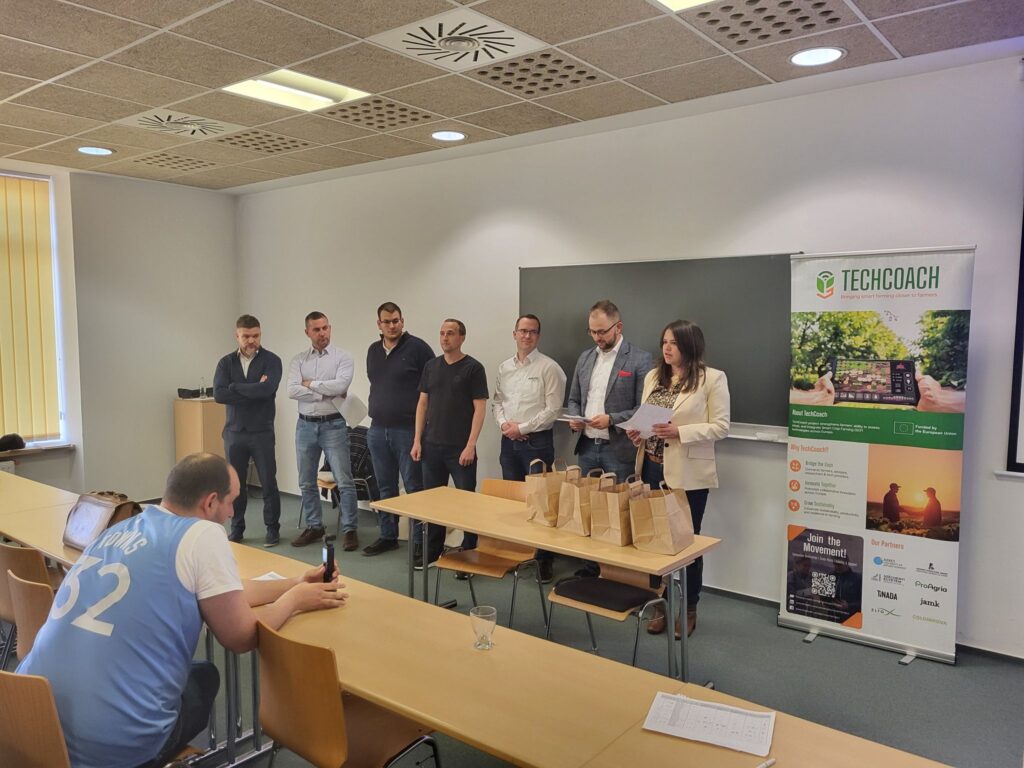
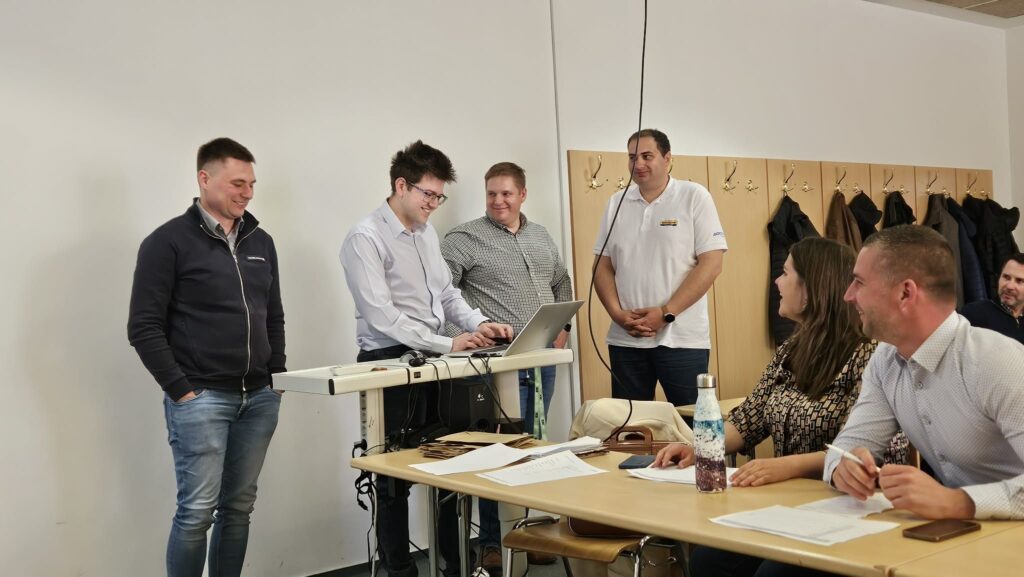
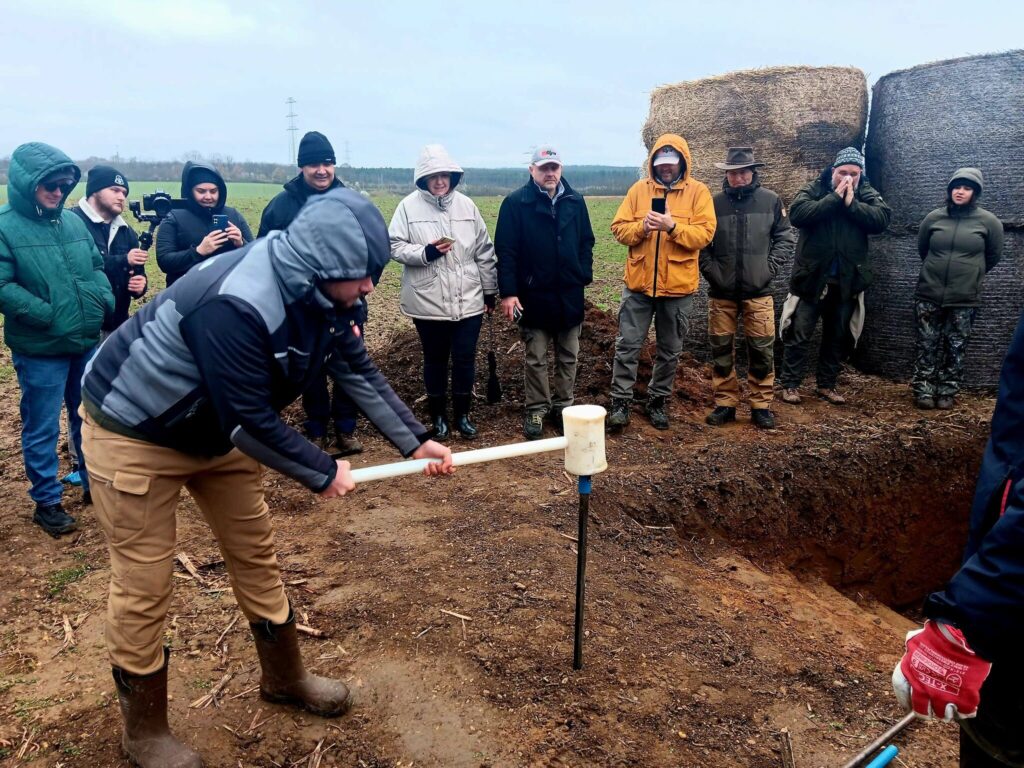
he TECHCOACH Innovation Bootcamp in Hungary took place on 22 April 2026 in Mosonmagyaróvár, bringing together farmers, advisors, university experts and technology-related stakeholders to work on practical Smart Crop Farming challenges.
The Bootcamp built on priorities identified through the Hungarian TECHCOACH network and focused on farmer-oriented solutions for more efficient input use, better decision-making and improved management of heterogeneous field conditions.
Date
22 April 2026
Location
Mosonmagyaróvár, Hungary
Language
Hungarian
Focus challenges
The Hungarian activities centred on practical challenges linked to precision crop production and the use of digital data in farm management.
- How can farmers better respond to differences in soil conditions, topography and productivity within the same field?
- How can precision technologies support more targeted use of seeds, fertilisers and crop-protection inputs?
- How can satellite data, soil sampling, yield information and field observations be combined into practical management decisions?
- How can farmers be better supported in interpreting data and selecting suitable Smart Farming technologies?



Highlights & outcomes
Precision management for a heterogeneous sunflower field
One of the main outcomes developed from the Hungarian Bootcamp focused on a 12.4-hectare sloping sunflower field in Zala County, where strong spatial variability was causing uneven productivity between different parts of the field. The approach combined:
- NDVI satellite imagery
- soil sampling
- topographic information
- previous yield data and
- field observations, to identify stronger and weaker production zones and develop a more targeted field-management strategy.
Based on the collected data, a site-specific management plan was developed for sunflower production.
Why it matters:
The Hungarian case showed how combining different sources of farm data can turn field variability into actionable management decisions. Rather than treating an entire field uniformly, the approach makes it possible to identify specific production zones and adapt management practices accordingly. This can support more efficient input use, reduce unnecessary interventions and improve the farmer’s understanding of field performance. The approach is particularly relevant for farms dealing with heterogeneous soils, sloping terrain, erosion risk, variable yields or uncertain nutrient availability.
Key Lessons
The Hungarian experience highlights a few clear lessons for Smart Farming adoption:
– Data become useful when translated into practical decisions.
Satellite imagery or soil data alone are not enough; their value comes from combining and interpreting them in relation to real field conditions.
– Farmer involvement is essential.
Management recommendations need to reflect machinery availability, previous farming practices and the farmer’s own knowledge of the field.
– Precision technologies work best with advisory support.
Cooperation between farmers, advisors, researchers and technology providers helps turn complex datasets into workable actions.
– Field heterogeneity should guide management decisions.
Variable soils and production conditions can justify more differentiated use of seeds, nutrients and other inputs.
What’s next
The Hungarian examples show how precision field management, variable-rate technologies and local monitoring tools can support better-informed decisions when they are combined with farmer knowledge, reliable data and appropriate advisory support.